November 1, 2025
Pipe Bending Process Explained: From Product Design to Quality Control and Delivery

Team Pipe Processing
Pipe bending is a precision manufacturing process used across multiple industries, including automotive, aerospace, HVAC, heavy equipment, and energy. For B2B companies designing or sourcing tube components, understanding the full pipe bending workflow helps optimize design choices, reduce production issues, and ensure consistent quality.
This article provides a detailed step-by-step explanation of the pipe bending process—from product design and material selection to final inspection and delivery.
1. Product Design and Engineering Input
The pipe bending process begins with engineering input and product design. Manufacturers typically receive 2D technical drawings or 3D CAD models from the client. These designs are analyzed for manufacturability, structural integrity, and compliance with bend limitations.
Key design considerations include:
- Bend radius: Minimum allowable radius is typically 1.5x the outside diameter (OD) of the tube but varies by material and wall thickness.
- Wall thickness: Critical for avoiding collapse, wrinkling, or excessive thinning during bending.
- Tolerance stack-up: The cumulative effect of dimensional tolerances, especially when multiple bends are required.
- End form requirements: Such as flaring, beading, or swaging, which must be accounted for in pre-bend length.
- Component integration: Connection points with fittings, brackets, flanges, or sensors.
Manufacturers often conduct a Design for Manufacturability (DFM) review and may use simulation tools to visualize bend behavior and detect risks like springback or tube interference.
2. Material Selection and Procurement
Material selection directly impacts the bendability, strength, corrosion resistance, and cost of the final product. The application environment and client requirements dictate which material is most suitable.
Common materials used in pipe bending:
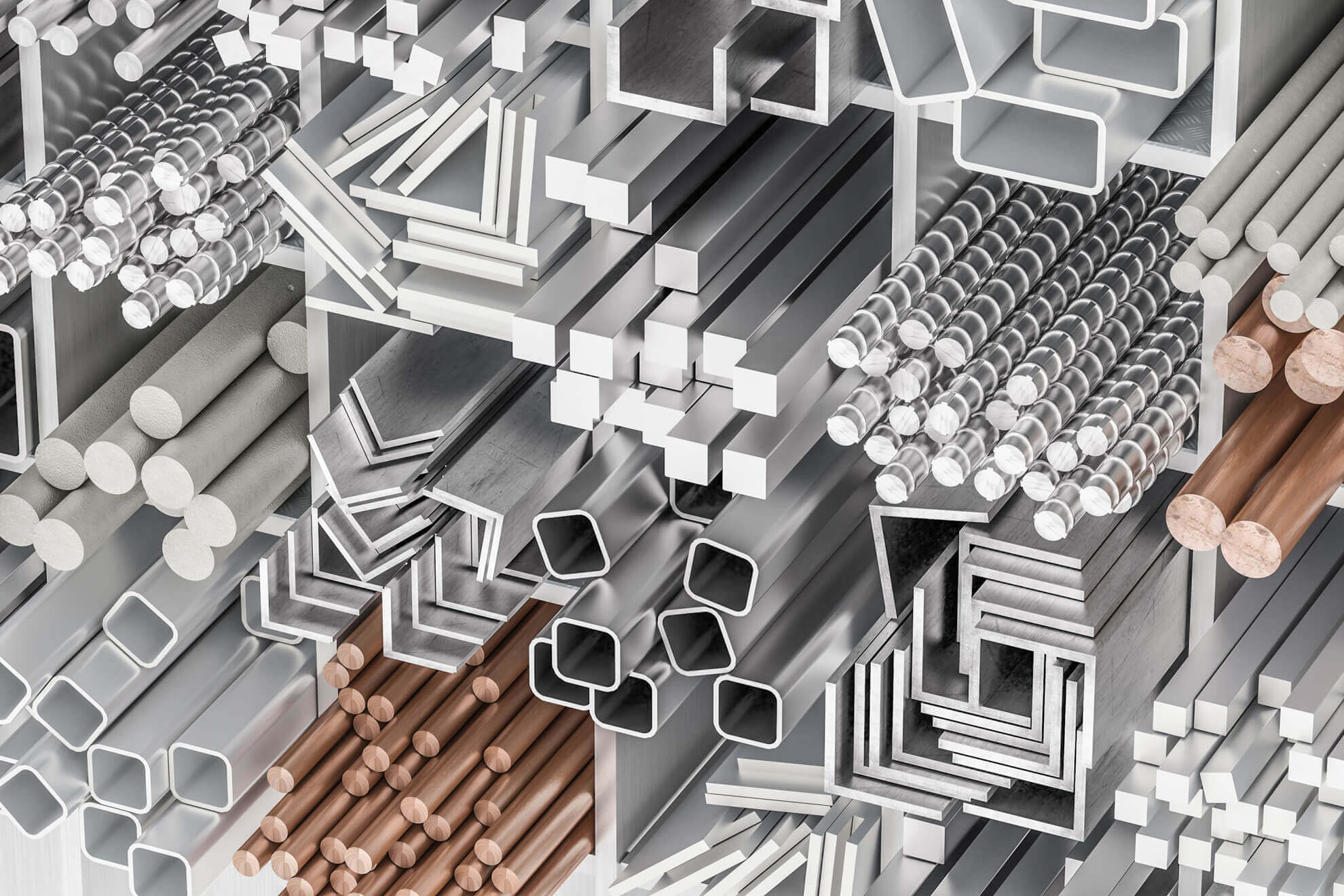
- Mild steel (carbon steel): Affordable, easy to bend, used in structural and HVAC systems.
- Stainless steel: Excellent corrosion resistance, often used in food processing, aerospace, and medical.
- Aluminum: Lightweight and corrosion-resistant, preferred in electric vehicle cooling systems and marine components.
- Copper and CuNi alloys: High thermal and corrosion resistance for HVAC and shipbuilding.
The wall thickness and tube diameter must be matched to the bending technique. Most manufacturers source materials to ASTM, SAE, or customer-specific standards and provide material certification (MTRs) with each batch.
3. Bending Method and Tooling Setup
Once the design and material are confirmed, the process advances to tooling and machine setup. This step is crucial for accuracy, consistency, and repeatability in production.
Common pipe bending methods:
- Rotary Draw Bending: Ideal for tight-radius, high-precision applications (e.g., roll cages, fluid lines).
- Compression Bending: Simple, cost-effective method where a die presses the tube around a stationary form.
- Roll Bending: Used for large-radius bends in structural applications.
- Mandrel Bending: A mandrel is inserted into the tube to prevent collapse or wrinkling, especially for thin-wall tubing.
Tooling includes:
- Bend die: Shapes the tube around the desired radius.
- Clamp die: Holds the tube in place during bending.
- Pressure die: Applies force to push the tube along the bend die.
- Wiper die: Prevents wrinkling at the intrados.
- Mandrel (optional): Supports the interior of the tube.
Tooling setup also includes machine calibration and test bending to validate angles, radii, and surface finish before full production.
4. Pre-Bending Operations
Before the actual bend, several preparatory steps ensure the tube is properly conditioned and ready for bending:
- Tube cutting: Precision-cut to length based on bend sequence and end form allowances.
- Cleaning: Removes grease, scale, or debris that could affect surface finish or tooling.
- Lubrication: Specialized lubricants are applied to reduce friction and tool wear.
- Part marking: Alignment marks or ID tags are added for orientation and traceability.
In some cases, tubes may undergo annealing (softening) to improve bendability if the material is particularly hard or work-hardened.
5. Bending Execution and Process Monitoring
The bending process is carried out on manual, hydraulic, or CNC pipe benders. CNC machines are preferred for production runs due to their speed, consistency, and ability to store multiple part programs.
Key process controls:
- Bend angle: Controlled by machine programming to within tight tolerances (often < ±0.5°).
- Bend radius: Monitored for consistency, especially in multi-bend parts.
- Springback compensation: Calculated and adjusted automatically in CNC machines.
- Deformation monitoring: Cameras or sensors can detect issues such as flattening or wrinkling.
Operators run a first-article inspection (FAI) to verify all dimensions and quality criteria before releasing the batch.
6. Post-Bending Operations
After the bending step, most parts require additional operations to prepare them for final use or assembly:
- End forming: Expanding, flaring, beading, or swaging to enable fluid-tight connections.
- Joining preparation: Sockets, sleeves, or weld-prep surfaces may be added.
- Hole punching or slotting: For brackets, sensors, or assembly features.
- Surface finishing: Includes deburring, polishing, or corrosion protection (e.g., powder coating, plating).
- Welding (if required): Some parts may be welded into sub-assemblies before shipment.
Each operation is documented in a process control sheet for repeatability and traceability.
7. Quality Control and Inspection
Inspection is essential to verify the finished part meets all client specifications. The level of inspection depends on the industry, part criticality, and customer requirements.
Common QC methods:
- Visual inspection: Check for cracks, tool marks, or surface defects.
- Dimensional inspection: Use calipers, angle finders, or Coordinate Measuring Machines (CMM).
- Laser scanning: Captures full part geometry for complex 3D bends.
- Wall thickness/ovality: Ensures structural integrity post-bend.
- Pressure or leak testing: For fluid-handling components.
Final Inspection Reports (FIR), First Article Inspection (FAI), or Production Part Approval Process (PPAP) documentation may be required for automotive or aerospace clients.
8. Packaging and Delivery
The final step is ensuring your bent parts arrive safely, correctly labeled, and on time.
- Protective packaging: Custom foam, caps, or separators to prevent dents or corrosion.
- Labeling: Part numbers, heat codes, or barcodes for inventory tracking.
- Lot tracking and documentation: Includes material certs, inspection records, and shipment logs.
- Delivery options: JIT (Just-in-Time), Kanban, or scheduled bulk shipments per your supply chain model.
Partnering with a pipe bending supplier that understands logistics and compliance requirements ensures a smooth and timely integration into your production workflow.
Conclusion:
Understanding the pipe bending process in detail helps product designers, engineers, and procurement professionals make better decisions across the supply chain. From initial design reviews and precise material selection to tool setup, CNC bending, and rigorous inspection, each stage contributes to product reliability, performance, and cost-efficiency.
For consistent quality and on-time delivery, work with a pipe bending specialist that offers full-service capabilities, documentation support, and engineering collaboration.
Need support with your next pipe bending project? Contact a trusted partner to discuss your technical requirements and get a quote today.
Share it!
Discuss Pipe Bending, Fabrication Project & Possibilities
From technical questions to custom fabrication needs, we’re here to help. Whether you’re exploring materials, need support with FRP or R&D, or just have feedback—reach out and start the conversation.