October 1, 2026
Why Engineers Choose Advanced Pipe Bending for Industrial Equipment

Team Pipe Processing
In industrial equipment, precision, strength, and reliability are crucial. Pipes and tubing form the backbone of machines in sectors like automotive, agriculture, and construction machinery. Choosing the right bending method can make the difference between a high-performing, durable system and costly failures or downtime.
Advanced pipe bending techniques offer engineers the control, accuracy, and repeatability needed to meet the demands of modern industrial applications. This guide explains why engineers rely on advanced methods, what benefits they provide, and how they enhance equipment performance.
What Is Advanced Pipe Bending?
Advanced pipe bending goes beyond traditional methods like manual or basic compression bending. It includes techniques such as:
- Mandrel Bending: Uses a mandrel inside the pipe to prevent wrinkling and maintain wall thickness, ideal for tight-radius bends.
- Rotary Draw Bending: Provides precision and repeatability for complex angles and critical assemblies.
- Induction Bending: Uses localized heating to bend thick or high-strength pipes without compromising material properties.
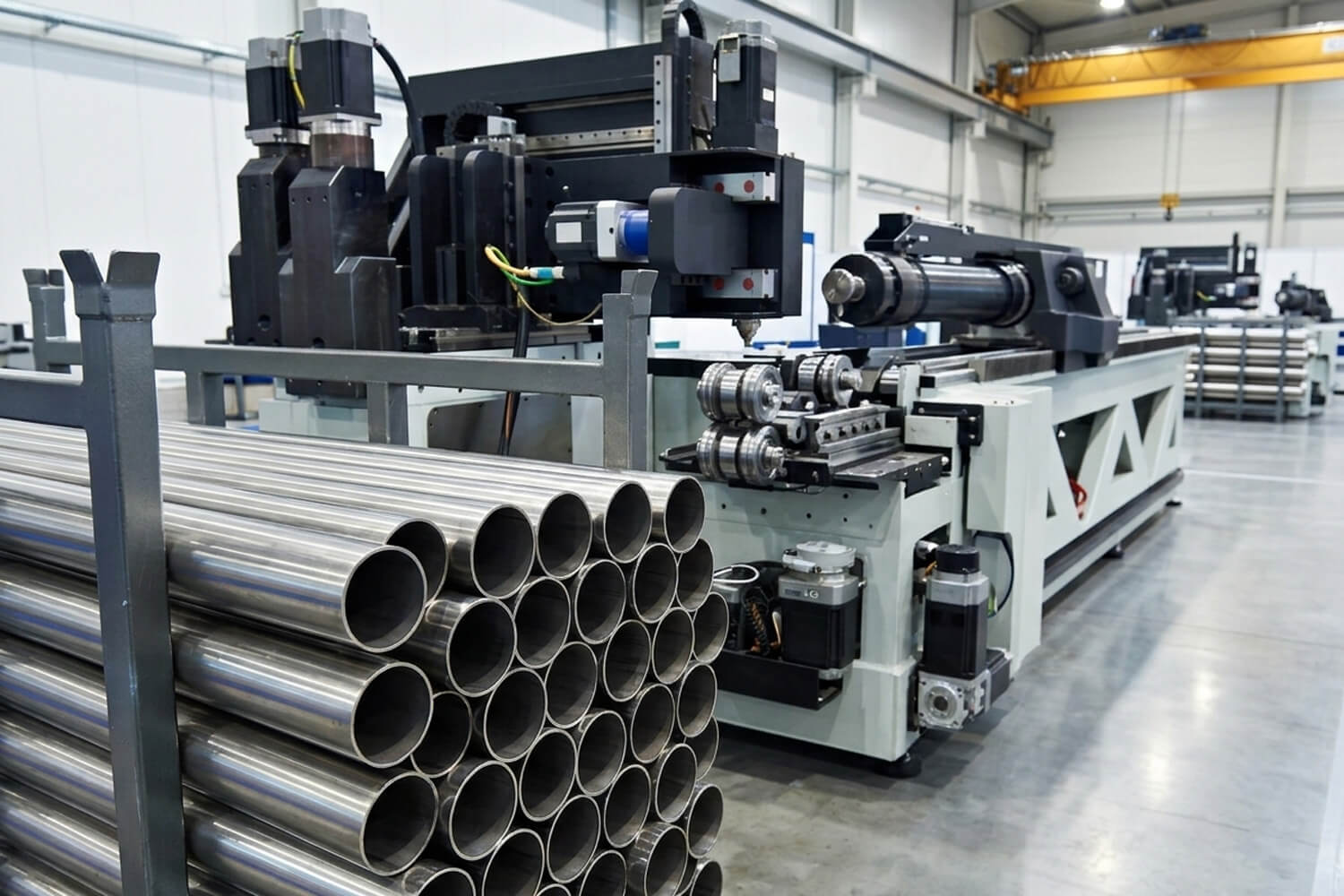
- CNC Automated Bending: Computer-controlled bending ensures consistent quality, tight tolerances, and minimal human error.
These techniques allow for precise bends that maintain structural integrity and fit complex equipment layouts.
Benefits of Advanced Pipe Bending in Industrial Equipment
- Enhanced Structural Integrity
Advanced bending preserves wall thickness and reduces stress concentrations, preventing weak points that could lead to failure. - Precision and Consistency
Automation and modern tools enable highly repeatable bends, crucial for mass production and modular assembly. - Optimized Space Utilization
Tight, accurate bends allow engineers to design compact systems with efficient layouts, saving space in machinery. - Reduced Material Waste
Precise bending minimizes scrap, lowers costs, and reduces rework compared to traditional methods. - Improved Equipment Performance
Smooth bends reduce turbulence in fluid or hydraulic systems, enhance load distribution, and extend equipment lifespan.
Industries That Benefit from Advanced Pipe Bending
Advanced pipe bending is widely used across multiple industries where performance, durability, and precision are critical. From heavy-duty machinery to automated systems, engineered piping plays a key role in ensuring efficient operation and long-term reliability.
| Industry | Application Example | Key Benefit |
|---|---|---|
| Automotive | Exhaust systems, chassis frames | Tight tolerances, consistent performance |
| Agriculture Machinery | Hydraulic lines, structural frames | Strength, durability, minimal downtime |
| Construction Machinery | Heavy-duty piping, fluid transfer systems | Safety, reliability under stress |
| Industrial Equipment | HVAC, process piping, material handling | Precision, reduced maintenance |
| Energy & Power Systems | Turbines, boilers, hydraulic systems | High-pressure performance and thermal resistance |
| Oil & Gas Equipment | Drilling rigs, refineries, offshore platforms | Complex routing in high-pressure environments |
| Mining Equipment | Drill rigs, haul trucks, crushing systems | Rugged durability in harsh operating conditions |
| Transportation Systems | Aircraft hydraulics, marine engines, rail systems | Lightweight efficiency and vibration resistance |
Across all of these sectors, advanced pipe bending enables engineers to design more compact systems with fewer connection points, improving reliability while reducing the risk of leaks and mechanical failure. This makes it an essential manufacturing process in modern industrial equipment design.
Tips for Engineers When Choosing Pipe Bending Methods
- Match the Technique to Material: Not all methods work equally well with steel, aluminum, or copper.
- Consider Bend Radius and Wall Thickness: Critical for avoiding deformation or weakening.
- Leverage Automation for Large Projects: CNC bending ensures repeatability and reduces human error.
- Inspect and Test Bends: Non-destructive testing verifies that bends meet specifications.
- Plan for Maintenance and Longevity: Advanced bending reduces stress points, extending system life.
Pipe bending can be a complex and labour-intensive process, and attempting to bend pipes in-house can be time-consuming and costly. In contrast, working with a pipe bending company can be a more cost-effective option, as these companies have the specialized equipment and expertise needed to bend pipes accurately and efficiently. By outsourcing their pipe bending needs to a professional company, businesses can save on the costs of purchasing and maintaining expensive bending equipment, as well as the costs of training employees to use the equipment.
Additionally, because pipe bending companies typically have a team of skilled technicians and engineers, they can often complete projects more quickly than if the work was done in-house, which can help save on labor costs. Overall, working with a pipe bending company can be a cost-effective solution that allows businesses to focus on their core operations while still getting high-quality, customized pipe bending services.
Conclusion
Advanced pipe bending is a strategic choice for engineers designing industrial equipment. By combining precision, consistency, and structural integrity, modern bending techniques help create durable, high-performing systems across automotive, agricultural, construction, and industrial sectors.
Choosing the right bending method not only improves equipment reliability but also reduces costs, minimizes waste, and enhances overall performance.
Share it!